
Baking a cake sounds like a delightful weekend activity until you actually stand in your kitchen, surrounded by five open containers of flour, sticky eggshells on the counter, and a sudden existential panic about the difference between baking soda and baking powder.
Cooking is an art where you can toss in random garlic cloves, whisper words of encouragement to the onions, and still end up with something edible. Baking, however, is unforgiving organic chemistry practiced by amateurs in pajamas. If you treat measuring flour like a casual suggestion, your oven will happily return a dense, sugary brick capable of breaking a window.
If you want to know how to bake a cake that actually rises, tastes like a bakery dream, and leaves you looking like a culinary genius, you need to understand the science disguised behind the fun.
The Room Temperature Rule Nobody Wants to Hear
Every beginner makes the classic mistake of pulling milk, eggs, and butter directly from the arctic depths of their refrigerator and throwing them into a mixing bowl.
When you try to cream cold butter with sugar, you are basically trying to blend pebbles into sand. You get tired arms and a clumpy mess. Room temperature butter traps microscopic pockets of air when beaten with sugar. Those tiny air pockets expand in the oven heat, giving your sponge cake that light, cloud-like texture everyone craves.
Cold eggs dropped into warm butter will shock the fat, causing the mixture to curdle instantly. Pull your dairy and eggs out forty minutes before you start. If you forgot because patience is not your virtue, submerge the cold eggs in a bowl of warm water for ten minutes and microwave the butter in short five-second bursts until soft to the touch.
Stop Scooping Flour Like You Are at the Beach
The number one reason home-baked cakes turn out dry enough to choke a camel is poor flour measurement.
Most people plunge their measuring cup straight into the flour bag, pack it down like wet beach sand, and dump it into the bowl. By doing that, you are accidentally packing thirty percent extra flour into your batter.
Use the spoon and level method. Stir your flour with a fork to fluff it up, spoon it gently into your measuring cup until it overflows, and scrape off the excess with the flat back of a butter knife. Better yet, weigh your ingredients with an inexpensive digital kitchen scale. One cup of all-purpose flour weighs exactly one hundred and twenty grams. Precision is the secret difference between a fluffy sponge and edible drywall.
The Baking Powder Versus Baking Soda Confusion
These two white powders look identical, sit next to each other in the pantry, and ruin cakes when swapped blindly.
Baking soda requires an acid like buttermilk, lemon juice, sour cream, or brown sugar to activate. The moment it meets moisture and acid, it produces carbon dioxide gas bubbles that make your batter rise.
Baking powder is basically baking soda that already comes mixed with a dry acid. It activates twice: once when it gets wet, and a second time when exposed to the heat of your oven. If your recipe calls for baking powder and you substitute pure baking soda, your cake will fail to rise and taste suspiciously like a bar of hotel soap. Check the expiration dates too. If that small yellow can has been sitting in your cupboard since the previous decade, throw it out and buy fresh.
Overmixing Is the Silent Cake Killer
Once your dry ingredients meet the wet bowl, put down your aggressive kitchen enthusiasm. There is a primal urge to beat cake batter like it owes you personal debts, but vigorous whipping belongs in a boxing ring, not inside your kitchen.
Flour contains natural proteins that develop into gluten whenever they get wet and agitated. While stretchy gluten networks are fantastic for chewy sourdough loaves and crispy pizza crusts, they are the mortal enemy of a tender cake crumb. Overworked batter turns your fluffy birthday sponge into something with the rubbery resilience of a bicycle tire.
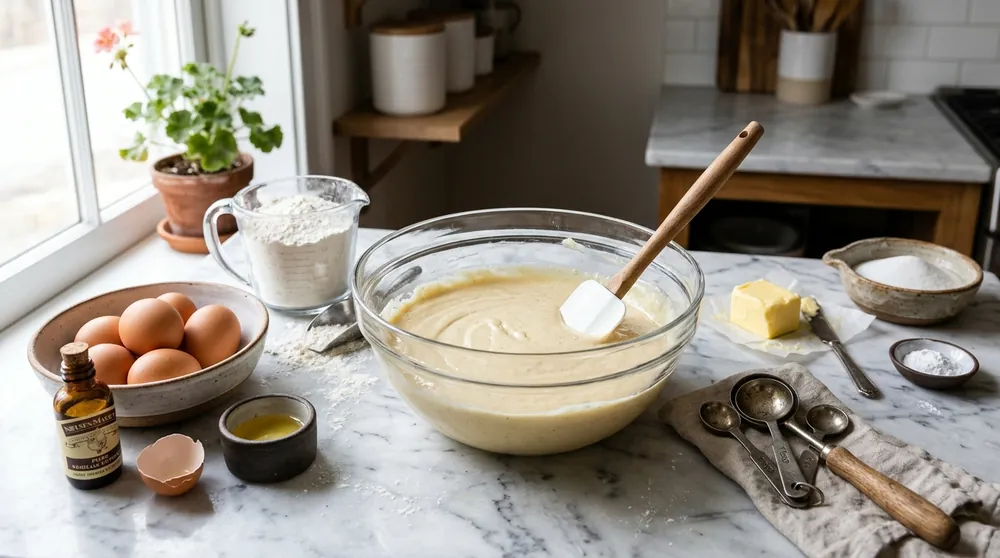
Put away the heavy electric hand mixer and grab a simple silicone spatula. Gently fold the batter by cutting down through the center, sweeping along the bottom of the bowl, and rolling the mixture over itself. You want to stop the exact second you no longer see dry streaks of white flour. A few tiny lumps in the batter are completely harmless and will melt away naturally under oven heat.
Pour the batter evenly into your prepared pans, give each pan two firm taps on the counter to release trapped air bubbles, and slide them straight into the heat. Leaving batter sitting on the counter allows the leavening bubbles to fizzle out into thin air before the oven has a chance to lock in that glorious lift.
Respect the Oven Door
Once your cake pans are greased, lined with parchment paper, and resting in the center rack of a preheated oven, leave them alone.
Resist the overwhelming urge to swing the oven door wide open every six minutes to admire your progress. Opening the door dumps fifty degrees of heat into your kitchen. That rapid drop in temperature causes the delicate, half-formed structure of your rising cake to collapse in the middle, leaving you with an embarrassing crater.
Trust the timer. Keep the door closed until the final five minutes of the recommended bake time. At that point, slide a simple wooden toothpick into the dead center of the cake. If it slides out clean with just a few moist crumbs clinging to it, your masterpiece is finished. If it comes out covered in wet batter, close the door and give it another five minutes.
The Golden Rule of Frosting
Do not frost a warm cake.
It sounds obvious, yet thousands of impatient bakers repeat this crime every single day. Buttercream frosting is fundamentally whipped butter and sugar. If you spread whipped butter onto a warm cake layer, the frosting will melt, slide down the sides, and create an unholy pool of sweet soup on your counter.
Let the baked layers cool inside the pans for fifteen minutes. Flip them gently onto wire cooling racks and let them reach absolute room temperature before bringing out the icing spatula. For the neatest slices, wrap the cooled layers in plastic wrap and chill them in the fridge for an hour before assembling.
Learning how to bake a cake takes a little respect for basic science, a bit of patience, and the ability to laugh when flour inevitably ends up on your eyebrows. Stick to the measurements, let your ingredients warm up, keep the oven door shut, and you will walk away with a cake that makes everyone think you secretly ordered it from an artisan bakery.
Share this content: